
True story from earlier this month: I was delivering a gift of groceries to a food bank on behalf of someone else when I noticed a bunch of oranges in a trash bin. When I asked about them, the attendant said (I’m paraphrasing), “If they have any dings, we can’t distribute them; we’ll get nasty comments on social media.”
To be fair, the oranges weren’t perfect. But they looked better than some of the oranges in my fridge, which I can confirm are not getting thrown out.
I thought about what my grandparents, who raised large families through tough times in Europe during World War II, would think. And I got to wondering:
- How did it come to be that a food bank, which exists to help distribute food to needy people, would throw out imperfect but edible food rather than risk a social media backlash?
- How did it come to be that a recipient of free food would dare to complain on social media if some of it was less than perfect?
And what would my grandparents have done? I’m pretty sure they would simply have sorted out and tossed anything no longer edible, and been quietly thankful for everything else. In an affordability crisis when some people are having genuine trouble feeding their families, that kind of resourcefulness would seem timely and important.
So here are a few tips for modifying our thinking about food and reducing food waste:
- Most importantly: understand that ‘best before’ dates don’t mean ‘not edible after’. Most non-perishable food items are perfectly edible and tasty long past their ‘best before’ dates. An explanation and guidelines here.
- Create a ‘use this first’ section in your fridge, and get in the habit of putting the things that need to be consumed the soonest there so you can use them before they spoil.
- If you don’t think you’ll get to something before it spoils, consider freezing it for later use.
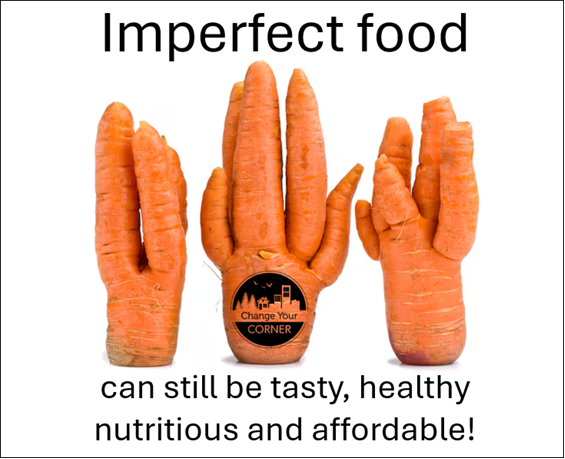
- Know that imperfect veggies – crooked carrots, misshapen potatoes and more – are just as tasty and nutritious as the perfect, so don’t be afraid to choose and use them. They’re usually lower priced too!
- Check out this excellent cookbook of recipes specifically designed to prevent food waste!
- Before tossing out anything, imagine what your grandparents would do – give it a sniff, trim out the bad, consider an alternate use (like soup) – and then try to emulate that mindset.
And strive to be grateful for every bite that fills a hungry tummy.
A postscript to my opening story: I managed to persuade the food bank attendant to let me sort out those oranges. The vast majority were perfectly edible, and were gratefully accepted as snacks at a local overnight shelter!